
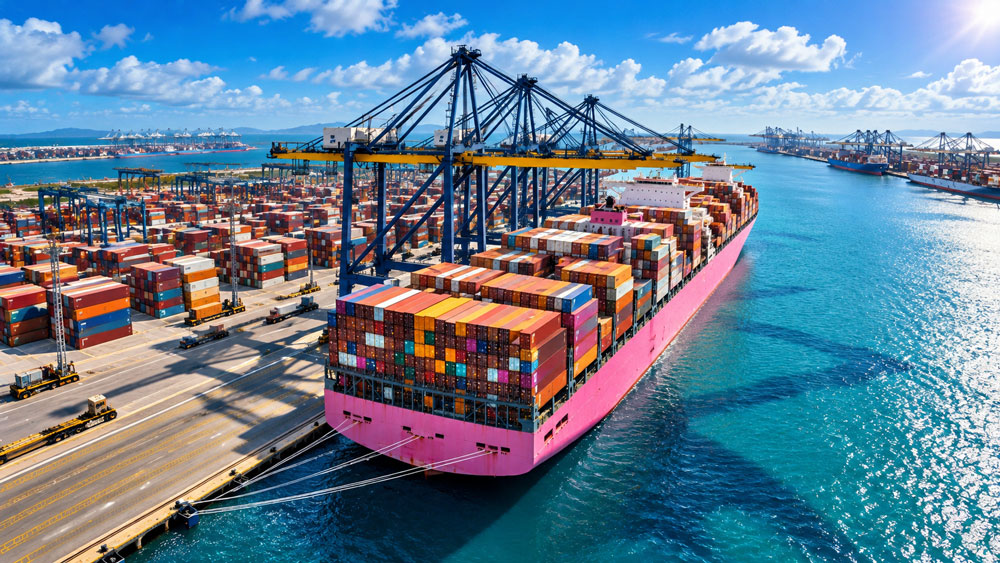
Ocean Freight and Container Shipping, Planned Around Your Cargo
From Full Container Load (FCL) and Less than Container Load (LCL) to bulk cargo shipping and specialized equipment, Labartis reviews routes and coordinates ocean freight arrangements around your cargo requirements.
Port selection, carrier schedules, transshipment points, equipment availability, origin and destination charges, and requested delivery dates all influence the proposed shipping plan. Capacity and schedules remain subject to final booking confirmation.
Choose the Right Ocean Freight Solution
No single shipping method works for every shipment. Cargo size, weight, packaging, handling requirements, timing and total landed logistics costs should be evaluated together.
Full Container Load
Dedicated container use for shipments where exclusive equipment makes operational or commercial sense. We review 20-foot and 40-foot options against cargo dimensions, weight limits and availability.
Less than Container Load
Consolidation of shipments from multiple customers in one container. Comparisons include not only ocean freight but also consolidation, deconsolidation and terminal charges.
Special Equipment
Feasibility reviews for reefer, open-top and flat-rack equipment, depending on cargo dimensions, temperature needs, port restrictions and carrier acceptance.
Bulk Cargo Shipping
Non-containerized commodities shipped in bulk, with vessel suitability, loading/discharge arrangements, port conditions and cargo characteristics reviewed before quotation.
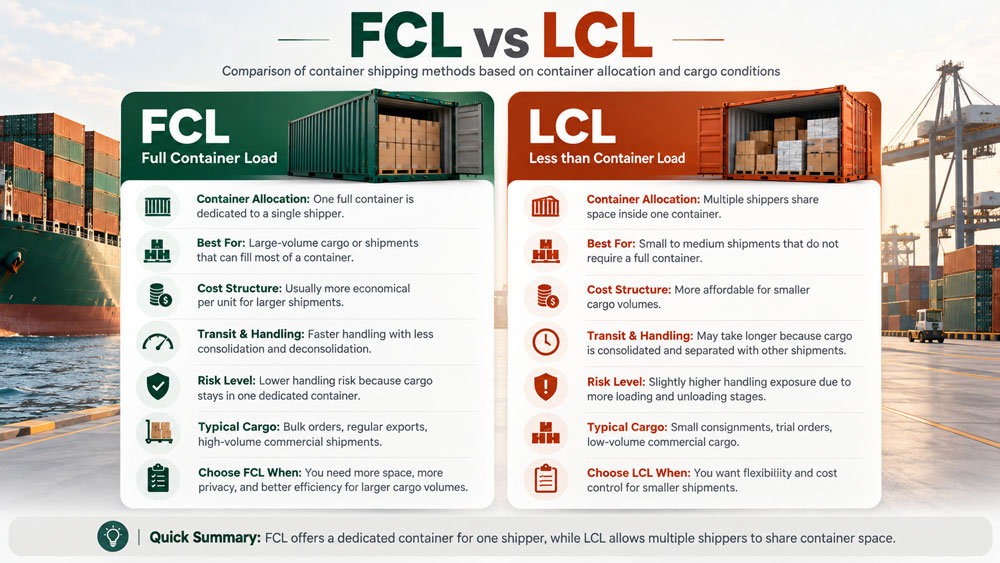
LCL is not automatically cheaper than FCL. Total cost, cargo requirements and transit considerations should be reviewed together.
Bulk Cargo Transportation and Vessel Planning
For commodities moved in large quantities without conventional containers, bulk shipping requires dedicated attention to cargo properties, vessel selection, port facilities and loading/discharge operations.
Dry bulk may include grains, minerals, aggregates and fertilizers, depending on cargo suitability and applicable regulations. Liquid bulk requires a separate assessment of cargo properties, tanks, terminal compatibility and handling restrictions; availability is subject to confirmation.
- Cargo: commodity, quantity, density, moisture or special characteristics where relevant
- Vessel and port: suitable vessel type, draft restrictions, berth and terminal capacity
- Operations: loading and discharge methods, handling equipment and expected productivity
- Commercial terms: charter or transport terms, laytime, demurrage and other applicable costs
LCL consolidates packaged shipments inside a container; bulk cargo is handled as a bulk commodity and may require a specialized vessel, terminal or chartering arrangement. Quotation and acceptance depend on the exact commodity, route and facilities.
Ocean Route and Carrier Planning
The shortest route on a map is not always the best shipping option. Direct services versus transshipment routes, sailing schedules, port of loading (POL), port of discharge (POD) and equipment availability all matter.
- Route and timing: compare schedules, connections and indicative transit times
- Equipment: assess cargo dimensions, weight and acceptance restrictions
- Costs: consider freight, origin and destination charges and contingent costs
- Commercial terms: clarify the agreed delivery term and service scope
Schedules and estimated arrival dates may change. Final capacity and bookings depend on carrier confirmation and operational conditions.
Your delivery term should reflect where the goods are physically handed over. When a container is handed to a carrier at a terminal before it is loaded on board, FCA may be more appropriate than FOB. The correct rule depends on your sales contract.
What Determines Ocean Freight Costs?
A meaningful rate comparison goes beyond the base ocean freight. Review the full scope of services and any excluded charges.
| Cost component | What to review |
|---|---|
| Main freight | Route, service, container/vessel type, cargo quantity and rate validity |
| Origin | Terminal handling, loading and documentation as agreed |
| Destination | Discharge, terminal and delivery-related services |
| Potential extras | Container demurrage/detention where relevant; for bulk, laytime, vessel demurrage, loading/discharge and port-related costs under the agreed terms |
From Booking to Delivery: Our Coordination Process
Following cargo review and agreement on shipping terms, the operational file supports booking coordination, terminal handover planning, documentation and shipment follow-up.
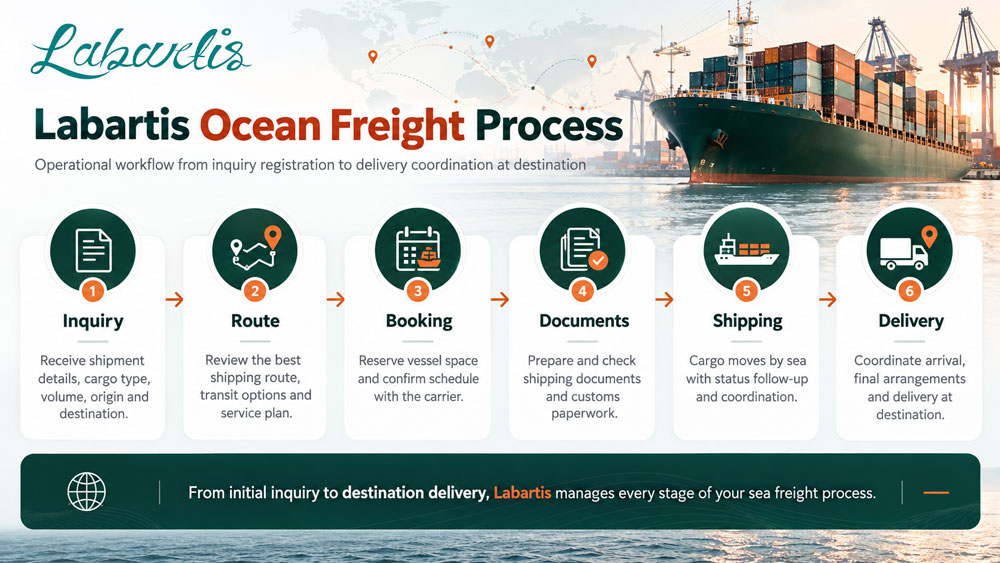
Cargo Enquiry
Receive cargo type, gross weight, volume, packaging, origin, destination and ready date.
Route and Rate Review
Evaluate available services, equipment, estimated transit and relevant charges.
Booking Coordination
Proceed with booking arrangements after agreement, subject to carrier space and acceptance.
Documentation
Coordinate terminal deadlines, Shipping Instructions, VGM and draft bills of lading as applicable.
Shipment Follow-up
Record carrier-reported milestones and identify actions required during the voyage.
Destination Handover
Coordinate arrival information, necessary documents and handover in line with agreed services.
Late Shipping Instructions, container gate-in or Verified Gross Mass (VGM) submissions may cause a missed loading and additional charges.
Shipping Documents and Operational Cut-offs
Successful shipment execution depends on coordinating the container gate-in cut-off, Shipping Instructions (SI), and review of the draft Bill of Lading (B/L). The exact requirements and deadlines depend on the carrier, port and booking.
Under SOLAS, the verified gross mass of a packed container must be communicated in time for vessel stowage planning. Missing VGM information can prevent loading. The shipper remains responsible for providing the information as required by the regulations.
Late container delivery, missing documents or delayed VGM submission can result in missed loading and additional charges. Confirm the exact deadlines for your booking.
Information Needed for an Ocean Freight Quote
- Cargo description and any hazardous or sensitive characteristics
- Gross weight, volume, dimensions and packaging
- Origin, destination and delivery terms (e.g., FOB, FCA or CIF)
- Cargo-ready date and time constraints
- Special equipment or handling requirements
- For bulk cargo: quantity in metric tons, commodity specification, available loading/discharge facilities and required loading dates
Our sales team reviews the request and may ask for more information. Submitting an enquiry does not confirm space, pricing or a booking.
Ocean Freight FAQs
What is the difference between FCL and LCL?
FCL allocates a container to one customer; LCL consolidates multiple shippers’ cargo. The best choice depends on shipment size, route and total handling costs.
Is the vessel arrival date guaranteed?
No. Estimated dates follow published schedules and may change because of port operations, connections or other factors.
Can you arrange special cargo transportation?
Feasibility depends on technical cargo data, equipment availability, port restrictions and carrier acceptance.
How do I request an ocean freight quotation?
Use the Labartis quotation form and provide your cargo description, origin, destination and contact details.
How does bulk cargo differ from LCL?
Bulk cargo is carried in large quantities without standard container consolidation, while LCL combines separate packaged shipments in a shared container. Bulk transport may call for vessel chartering and dedicated terminal handling.
Technical References
Information about VGM follows guidance from the International Maritime Organization (IMO). Delivery-term considerations are informed by the ICC Incoterms® 2020 checklist.
Plan Your Next Ocean Shipment
Share your cargo details so the team can review shipping routes, equipment and available service options.