
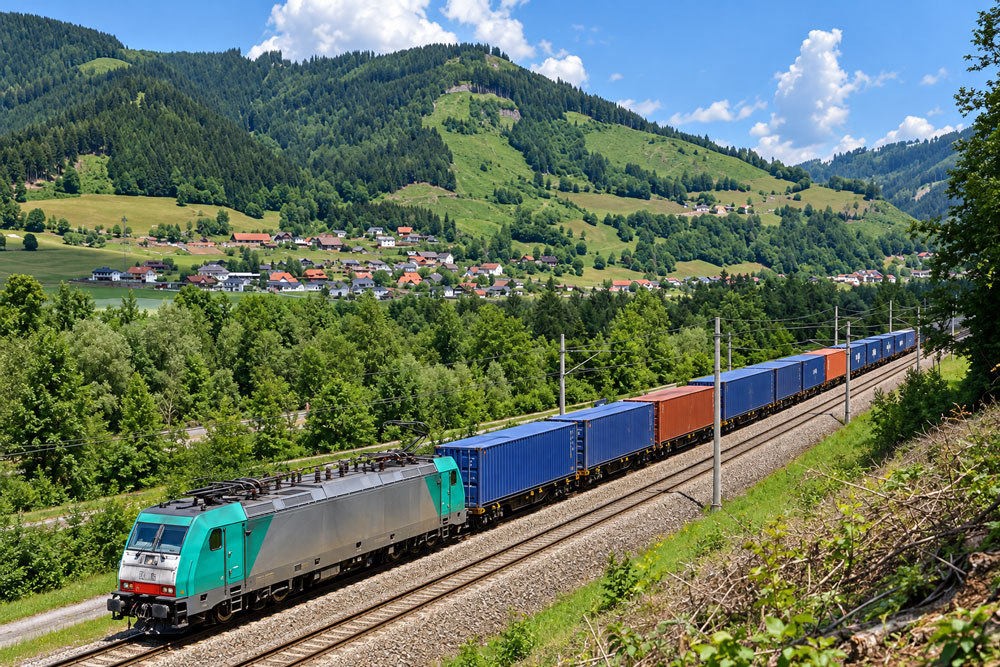
International Rail Freight: Route, Wagon and Container Planning
International rail freight can be an important option for containerized shipments, industrial cargo and selected bulk commodities. Labartis reviews cargo specifications, origin and destination terminals, corridor availability and cross-border requirements to help identify a suitable transport plan.
Availability, departure schedules, wagon capacity and final rates are subject to confirmation by the relevant operators.
Rail Freight Solutions for Different Cargo Types
Wagonload Freight
For suitable bulk, industrial or heavy cargo, we review wagon type, axle-load limits, loading arrangements and operator acceptance.
Containerized Rail Freight
Container movements are assessed against available terminals, suitable equipment, network restrictions and shipment handling requirements.
Rail–Road Intermodal Transport
Where the shipper or consignee is not rail-connected, pre-carriage and on-carriage by truck can be considered together with terminal transfers.
Dangerous goods, out-of-gauge cargo and temperature-sensitive shipments may require specialized equipment, documentation and operator approval. Acceptance must be confirmed before booking.
Rail Route Planning and Border Coordination
International rail planning involves more than distance or line-haul rates. Origin and destination terminals, train schedules, wagon availability and border arrangements affect the viability of a route. Depending on the corridor, operations may involve bogie exchange, transloading, differences in track gauge or additional documentation.
- Origin and destination rail terminals and intermediate stations
- Cargo type, gross weight, dimensions and securing requirements
- Train schedules, available capacity and expected stops
- Border and transit procedures and possible cargo transfer
- First-mile and last-mile trucking requirements
- Terminal handling and ancillary charges
Transit times are estimates and may change due to terminal congestion, border checks or operating disruptions.
What Determines Rail Freight Costs?
A rail quotation depends on more than distance. Cargo characteristics, wagon or container type, terminal services, cross-border handling, supplementary trucking and the agreed service scope can all influence the total cost.
| Cost factor | What to check |
|---|---|
| Rail line-haul | Corridor, distance, applicable tariffs and operators |
| Equipment | Wagon or container type and permitted load |
| Terminal services | Loading, unloading, storage and handling |
| Border and transit | Documentation, technical operations and related charges |
| Intermodal services | First/last-mile trucking and transfers |
Confirm whether terminal handling, customs-related procedures, supplementary trucking and final delivery are included in the offered price or charged separately.
Rail Freight Process: From Inquiry to Delivery
After an initial cargo review, the proposed corridor and equipment are evaluated. Booking, documentation, terminal handling and shipment updates are coordinated within the agreed service scope.
Submit an inquiry
Share cargo description, package or container count, weight, dimensions, origin and destination.
Review route and capacity
Assess railway corridors, terminals, operators, wagon availability and intermodal requirements.
Confirm terms and request booking
Following agreement, coordinate the capacity request and proposed schedule with relevant operators.
Prepare documents and handover
Review transport documents, acceptance criteria and cargo handover deadlines.
Follow up on rail movement
Track operator-reported progress, stops, border milestones and required actions.
Coordinate destination delivery
Arrange terminal arrival information and delivery steps according to the agreed service scope.
Rail Consignment Notes and Border Documentation
Documentation depends on the countries involved, the applicable legal regime, customs procedures and cargo characteristics. CIM and SMGS are established legal frameworks for international rail carriage, while a common CIM/SMGS consignment note can be used on applicable corridors. No single document should be assumed to cover every route.
- Commercial invoice and packing list
- Consignor, consignee, goods and station details
- Consignment note appropriate to the applicable rail regime
- Customs/transit documents and any cargo-specific permits
- Loading, gross weight, dimensions and package marks
Requirements should be verified for the selected corridor before cargo handover.
Rail Freight Inquiry Checklist
- Accurate cargo description and any special handling requirements
- Gross weight, volume, dimensions and number of packages
- Preferred wagon or container type, if known
- Origin and destination stations or final delivery locations
- Delivery term and cargo-ready date
- First-mile or last-mile trucking requirements
- Delivery constraints and available documents
If the correct wagon or rail terminal is not yet known, share the shipment details and available transport options can be reviewed.
Rail Freight FAQs
What cargo is suitable for rail freight?
Rail may suit selected bulk, industrial and containerized cargo, depending on infrastructure, equipment, network limits and operator acceptance.
Can rail freight include door delivery?
Where a site is not rail-connected, supplementary trucking may be required. Door delivery should be explicitly included in the agreed scope.
What is the difference between CIM and SMGS?
They are distinct legal frameworks for international rail transport. The applicable consignment note depends on the countries and corridor involved.
Are rail transit times guaranteed?
No. Network conditions, available train paths, border checks and terminal operations can affect schedules.
What details are needed for a quote?
Cargo type, weight, dimensions, origin, destination, cargo-ready date, equipment needs and delivery term are key details.
Request a Rail Freight Quote
Send your cargo details so available corridors, acceptance conditions, suitable equipment and possible transport costs can be reviewed.
General rail documentation information is based on materials from OTIF and UNECE. Actual operational requirements must be confirmed for each route.