
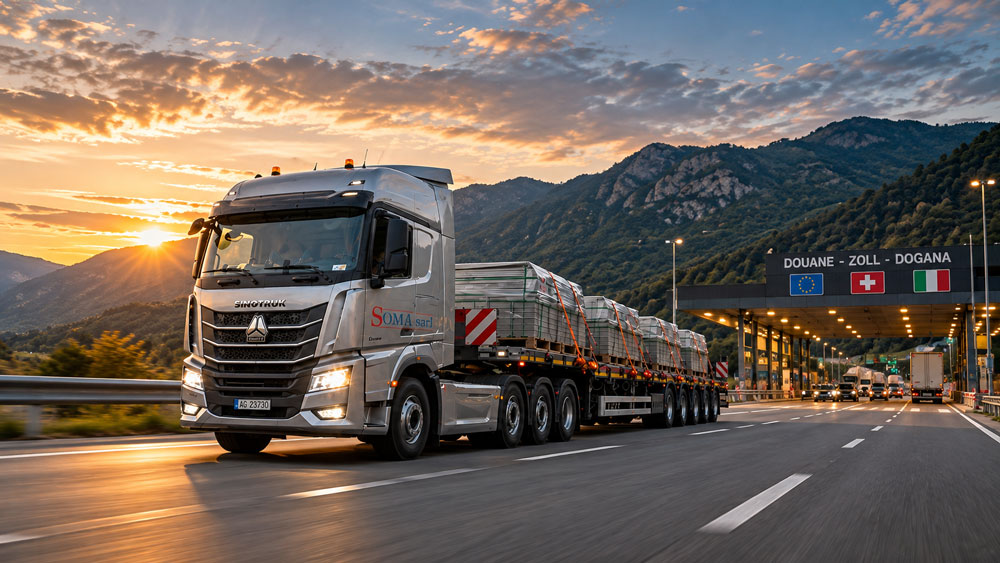
International Road Freight: Route Planning, Trucking and Cross-Border Delivery
International road freight offers a flexible way to move commercial cargo between origin and destination. Labartis reviews cargo type, weight, volume, route and required delivery window to evaluate suitable trucking arrangements and operational requirements.
Truck availability, border transit and delivery schedules depend on capacity, route regulations and confirmed bookings. Estimated transit times are not guaranteed.
Road Freight Options for Different Cargo Needs
Choosing between a dedicated truck and a shared-load service involves more than shipment volume. Pickup and delivery points, possible cargo transfers, sensitivity and total landed transport costs also matter.
Full Truckload
Full Truckload (FTL) dedicates a truck to one customer's shipment. It may suit larger cargo volumes or goods that benefit from greater control over loading, routing and handling.
Less-Than-Truckload
Less-Than-Truckload (LTL) allows cargo from multiple customers to share transportation capacity. Consolidation, handling, stopovers and the delivery schedule all affect the final option.
Special Cargo Transport
Temperature-sensitive, heavy or out-of-gauge cargo requires an assessment of vehicle type, load securing, route restrictions and any permits before acceptance.
Dangerous goods, oversized loads and certain controlled commodities may require special documentation, equipment, permits or carrier approval. Acceptance must be confirmed against applicable route requirements.
Route Planning and Border Coordination
Distance is only one factor in international trucking. Border procedures, driving restrictions, waiting times, pickup and delivery locations, and transit requirements also shape the route plan.
- Exact loading and delivery addresses and agreed delivery terms
- Available corridors and relevant border crossings
- Truck type, weight limits and dimensional restrictions
- Transport and transit documentation responsibilities
- Cargo readiness and the customer's delivery window
Depending on the countries and the shipment, a CMR consignment note and the TIR customs transit procedure may be relevant. Their applicability should be verified for each movement.
What Determines Road Freight Costs?
Freight rates reflect shipment specifications, vehicle selection, route and agreed services. Comparing only the base trucking rate may conceal additional costs.
| Cost factor | What affects the quote |
|---|---|
| Service type | Dedicated FTL or consolidated LTL movements |
| Vehicle requirements | Capacity, dimensions, refrigeration or specialist equipment |
| Route and borders | Distance, road restrictions and crossing conditions |
| Loading and unloading | Equipment, labor, appointments and waiting time |
| Documentation | Transit coordination and other agreed services |
| Potential extras | Storage, delays, special permits or services outside the quote |
Every quotation should clarify its inclusions, exclusions and validity period.
From Booking to Delivery: The Road Freight Process
Submit an inquiry
Provide commodity details, package count, dimensions, weight, origin and destination.
Review route and truck
Assess routing, vehicle options, operating constraints and applicable costs.
Agree and book
Following agreement, coordinate capacity and pickup or cargo handover arrangements.
Check documents
Review road consignment note details, commercial invoice, packing list and required papers.
Follow up on transit
Record carrier-reported shipment milestones and actions requiring attention.
Coordinate delivery
Arrange arrival and unloading steps within the scope of agreed services.
Road Transport Documents and Transit Requirements
Depending on the contract and route, documentation may include a CMR consignment note, commercial invoice, packing list, customs documentation and applicable permits. The CMR framework governs eligible international road carriage contracts; it does not replace all customs or transit paperwork.
Border queues, regulatory inspections and documentary requirements can change actual arrival times. Estimated schedules do not guarantee border clearance or delivery by a fixed date.
Road Freight Quote Checklist
- Precise commodity description and any dangerous or sensitive characteristics
- Package count, gross weight and dimensions per package
- Origin and destination addresses and loading/unloading locations
- Packaging and needs for forklift, crane or refrigerated equipment
- Incoterms delivery rule and cargo-ready date
- Available information on documents and permits
Submit the initial details using the Labartis quotation form. Our team may request additional shipment information.
Road Freight FAQs
What is the difference between FTL and LTL?
FTL dedicates a truck to one customer's cargo, while LTL consolidates compatible shipments. The right choice depends on shipment size, service expectations and total cost.
Are road freight delivery times guaranteed?
No. Traffic, restrictions, border procedures and document checks may affect the actual schedule.
Does every international road shipment require TIR?
No. TIR is a customs transit system used where applicable, depending on the participating countries, procedure and route.
What information is needed for oversized cargo?
Exact dimensions, weight, cargo geometry, securing requirements and loading locations are necessary to evaluate vehicles, routes and permits.
Request a Road Freight Quote for Your Cargo
Share your shipment details so we can review transport options, routing, documentation and available rates.